I just got off a Zoom call with Netflix regarding the TV/Film rights to my debut novel, Face the Night. Typing that sentence almost feels like writing fiction. I’m supposed to be browsing Netflix, not pitching them!
How did we get here? Well, it all started on a bright and blustery morning: November 1, 2017.
Like millions of other folks, I’d always wanted to write a novel. Growing up, I wrote dozens of short stories heavily “inspired” by whatever horror movie I last convinced my parents to let me rent from Blockbuster. Later, I’d submit poems and short stories to my high school’s literary magazine. And when they rejected pieces, I published them myself in photocopied zines.
After college, I continued to write and publish short-story zines while, of course, always entertaining the idea of writing a novel.
But I knew a novel was a huge undertaking…
I’d better plan first. And outline. And read Stephen King’s On Writing again. And worldbuild my fictional town. I need to draw a map! And don’t forget about those character sheets. How well can I write my MC if I don’t know her favorite band and her least favorite drink?
And a-n-y-t-h-i-n-g except actually writing my damn novel.
SMASH CUT back to 2017. When my friend Kristina Horner—former NaNoWriMo Municipal Liaison, co-host of the Write Your Damn Novel podcast, and 20-times NaNo winner—introduced me to the idea of National Novel Writing Month, I got very excited.
It’s a competition, it’s gamified, a ton of my friends are doing it, and there’s a spreadsheet?! I’m in!
I spent October prepping, and I was confident I was ready. I was going to lock myself in my home office every day until I had my 1,667 words written. No excuses.
Incredibly… it worked! I mean, it wasn’t easy, but it also wasn’t nearly as difficult as I had feared. I found that I’d get into a rhythm and always had an upcoming scene I was eager to write. How will my characters escape this scenario? How do I get that guy from point A to point B? I had an outline, but I’d left myself enough wiggle room that each day still felt inspiring. There were all these little problems and intriguing mysteries to solve along the way.
After typing “The End” and logging my final day of words, I put the book aside for a year. I’d been told that I shouldn’t tackle edits right away, and now I had a new obsession to fill my time: learning self-publishing. I didn’t for one second think I could land an agent or sell to a Big-Five imprint, but I had been photocopying my own zines and selling them on my website to readers and friends. Why couldn’t I do the same for my book?
I’d gone to college for graphic design, so I had no doubts that I could put together a killer cover and design ads that would convert. But if I wanted this book to do well, I’d need to learn everything I could about marketing, trim sizes, distribution, interior formatting, newsletters, whatever the heck a BookBub is, and so much more I didn’t know I needed to know.
Eventually, I pulled out the novel again.
After too many rounds of my own revisions and rewrites and setting the manuscript aside for a while again, then hiring an editor who had to drop out half-way through editing the book, finding a new editor, and starting again, I finally had a manuscript I felt was ready for the world.
Face the Night had grown from just over 50K to 87K words. The two editors and a few beta reader friends had helped me flesh out my scenes and character arcs, and I’d tweaked the ending. The novel and I had come a long way together, but at last I had a book I was proud of. Something I would be excited to read.
A year later, I formed my LLC, a small press called Shortwave. I needed a cool imprint name to put on the spine and title page, as I didn’t want the book to look self-published. I figured out IngramSpark and KDP. I reached out for blurbs. And on March 8, 2022, Face the Night, my debut novel, was published.
I’d seen the factoid posted here and there that the average self-published book sells fewer than 100 copies in its lifetime. So I made that my pre-order goal. 100 copies.
By release day, I’d pre-sold over 300 copies, tripling that initial goal.
In the following months, the book received a starred review from Kirkus.
“This outstanding novel is reminiscent of early works by Stephen King and Peter Straub. An impressive, complex horror tale—two (rotting) thumbs up.”
– Kirkus Reviews (starred review)
Then it was a semi-finalist for the Publishers Weekly BookLife Prize.
It was a finalist for Best New Horror Novel at the Next Generation Indie Book Awards.
Then it won the Hoffer Award for Best Commercial Fiction.
By the end of the year, Face the Night, this unassuming first-year NaNo novel, had a shelf-talker at Barnes & Noble, had sold over a thousand copies, and started landing on various lists, including Kirkus’s 100 Best Indie Books of the Year.
Another year later, the TV/Film rights were optioned by a small horror production company for a feature film. A script was written by a screenwriter the production company had hired. Reading that script for the first time, seeing my characters come alive through someone else’s vision, was a surreal experience.
Tragically, the owner of that small production studio passed away shortly after the script was finished. As it was an independent company, his widow gave me the TV/Film rights back and shut down the studio.
I was devastated, both professionally and personally, as I had become friendly with the owner. While the Face the Night screenplay was being written, his studio had produced an adaptation of one of my short stories, and we’d worked close together on that production.
And on the professional side, who among us doesn’t dream of one day seeing their book up on the big screen?
However, out of the blue seven months later, Netflix emailed me to set up a meeting. One of their reps had picked up a few of my small press’s books at a horror conference, and they were interested in chatting more about Face the Night.
We haven’t closed a deal yet. I’m currently working on developing the book for a limited series with screenwriter Jamie Flanagan (Midnight Mass, The Fall of the House of Usher), for Netflix to look at later next year.
It’s still the longest of longshots, but what about this entire journey hasn’t been? From me believing I could write my first-ever novel in a single month to having the audacity to believe I could outsell the vast majority of self-published titles in pre-orders alone, to… well, this book somehow rising up again from a lost film production to find a potential second life as a series.
I’m struck by how the simple yet powerful idea of NaNo led me here. The uncomplicated, butt-in-chair approach. The comradery of “Yeah, we’re all suffering a little, but we’re suffering together!” which helps so many get over that stumbling block of a-n-y-t-h-i-n-g except actually writing our damn novels.
I couldn’t be more grateful for all of the NaNo 2.0 team members, organizers, and volunteers for continuing this inspired idea. And for all of the participants, without whom we wouldn’t have new folks like me finally finishing their books every year.
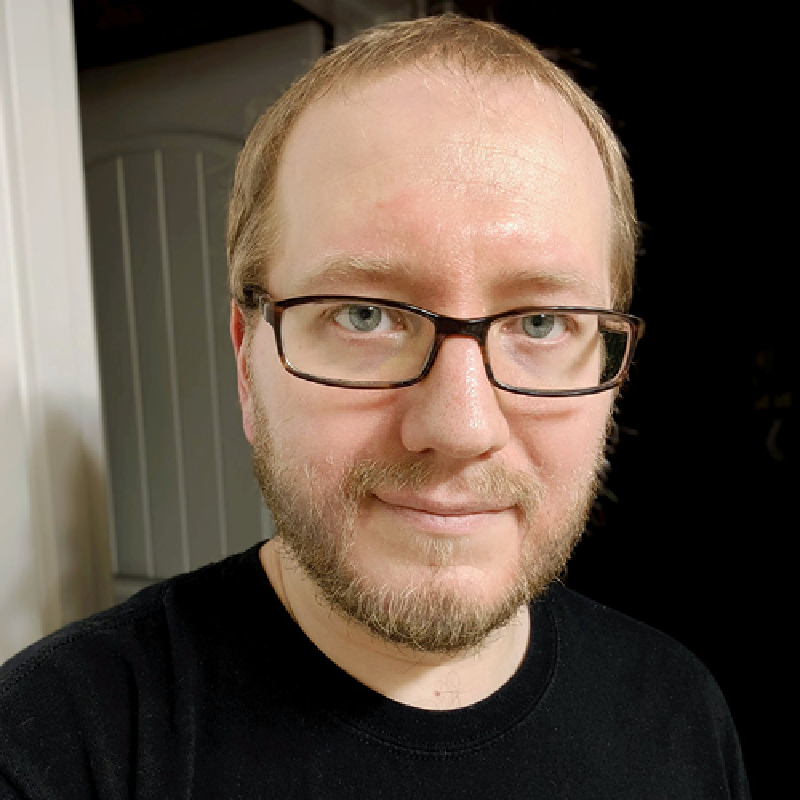
Alan Lastufka is a Hoffer Award-winning author and the owner of Shortwave, an independent small press. He writes horror, supernatural, and sci-fi/fantasy stories. His debut novel, Face the Night, received a starred Kirkus review, was a finalist for Best New Horror Novel at the Next Generation Indie Book Awards, and won the 2022 Hoffer Award for Best Commercial Fiction. It was also listed as one of the 100 Best Indie Books of the Year by Kirkus. When he’s not writing, Alan enjoys walking through Oregon’s beautiful woods with his partner, Kris.